

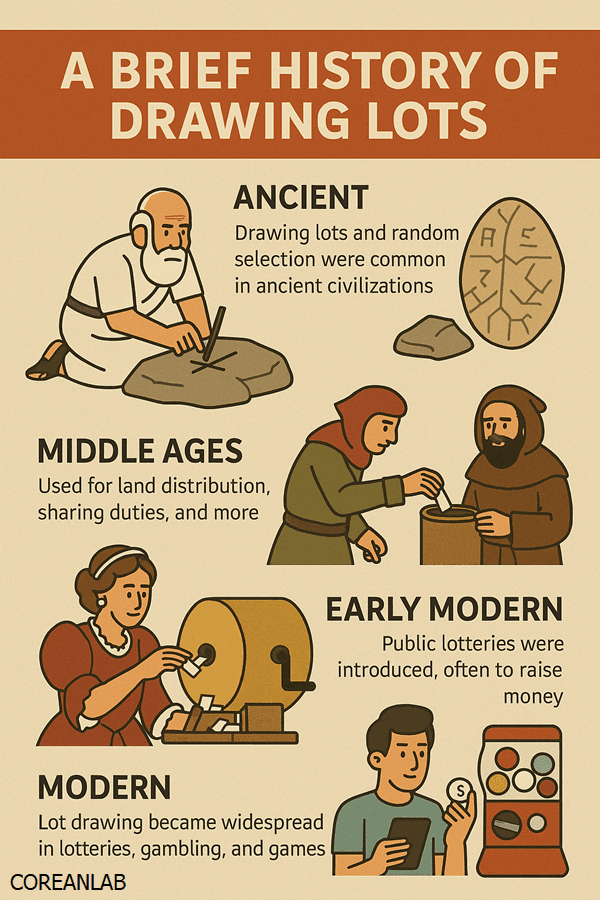
When Did Drawing Lots & Random Selection Start? – History of drawing lots
뽑기·추첨, 대체 언제부터 있었던 방식일까?
“운에 맡긴다”는 행위는 생각보다 훨씬 오래된 인류의 기술이다.
고대 종교 의식부터 현대 로또·가챠까지, “무작위로 뽑는다”는 아이디어가
시대마다 어떤 방식으로 쓰였는지 간단히 정리해본다.
・Main 설명은 English, 바로 아래에 한국어로 요약/보충을 붙였습니다.
・정확한 연도보다, “어떤 시대에 어떤 용도로 쓰였는지” 흐름 위주로 보는 글입니다.
Long Before Lotteries: Ancient Ways of Letting “Fate Decide”
우리가 아는 복권·가챠보다 훨씬 전에, 고대인들은 이미 운에 맡기는 결정 방식을 쓰고 있었다. 지금 표현으로 하면 “추첨·뽑기”의 원형이다.
Long before modern lotteries, ancient civilizations used random selection to ask the gods, to share land, or to decide who would take a risky role.
현대식 로또가 등장하기 훨씬 이전부터, 고대인들은 신의 뜻을 묻거나(점복), 토지를 나누거나, 누가 위험한 일을 맡을지 정할 때 이미 “무작위 선택”을 활용했다.
Ancient China & East Asia — Divination as Proto-Lottery
중국·동아시아에서는 점복(占卜)이 사실상 뽑기의 초기 버전이었다. 패나 막대기, 뼈 조각 등을 섞고 하나를 뽑아 “this is heaven’s answer”라고 본 것이다.
In ancient China, divination often used bundles of sticks, shells, or bones that were cast or drawn at random to interpret the will of heaven.
- Oracle bones and divination sticks functioned like an early “lot-drawing” system.
- 갑골·점괘 막대기는 오늘날의 제비뽑기처럼, 어떤 조합이 나오느냐에 따라 “신이 이렇게 결정했다”고 해석하는 도구였다.
Casting Lots in the Bible — Religious Randomness
성경에는 제비 뽑기(casting lots)가 여러 번 등장한다. 제사장 순서, 땅 분배, 죄인 판정 등 중요한 결정을 “무작위+신의 뜻”으로 결정했다.
In the Hebrew Bible, “casting lots” was a formal method to decide land distribution, priestly duties, or even guilt and innocence.
- Random choice was not seen as chaos, but as a way to let God decide.
- 완전한 공정함·중립성을 확보하기 위해, 사람의 판단 대신 제비에 결과를 맡겼다.
Ancient Greece — Randomly Choosing Politicians
고대 아테네 민주정에서는 상당수 공직자를 추첨(κλήρος, kleros)으로 뽑았다. 말 그대로 “정치인을 제비 뽑기”로 선출한 셈이다.
In classical Athens, many public offices were filled by drawing lots, because random selection was seen as the fairest way to avoid corruption and elites’ domination.
- Random rotation spread power across many citizens over time.
- 권력을 특정 가문·파벌이 독점하지 못하게 하려는 민주적 기재로 추첨이 쓰였다.
Middle Ages — Sharing Land, Duties, and Burdens
중세 유럽에서는 길드·마을 공동체·수도원 등에서 토지·세금·노역 순번을 나눌 때 뽑기 방식이 재활용되었다.
In medieval Europe, lotteries and random draws were used informally to allocate plots of land, share tax burdens, or decide work rotations.
- It was a practical way to say, “No favoritism, everyone takes their chance.”
- 누가 손해 보고 누가 이득 보느냐 싸움 대신, “뽑기로 정하자”가 갈등 완화 장치였다.
15–18th Century — The Birth of Public Lotteries
근대에 들어서면서, 추첨은 “공공사업 자금을 모으는 도구”로 바뀐다. 오늘날 로또에 가까운 public lottery의 시작이다.
From the 15th century onward, European cities began using lotteries to raise money for bridges, walls, ports, and wars.
- Citizens bought tickets; a few received large prizes by random draw.
- 도시·왕실은 세금 대신, “당첨의 꿈을 미끼로 자발적 참여”를 끌어냈다.
By the 16th century, state-backed lotteries had spread across many parts of Europe, making “lottery” a normal part of public finance.
16세기경에는 여러 유럽 국가에서 국가 공인 복권을 운영하며, 추첨은 “행정+재정 시스템 안에 공식 편입된 장치”가 된다.
19–20th Century — From State Lotteries to Everyday “Draws”
19~20세기에 들어오면 뽑기·추첨은 국가 복권 + 일상 문화 두 축으로 퍼진다. 오늘날 우리가 아는 “행사 추첨, 경품, 복권” 틀이 이때 확립된다.
In the 19th and 20th centuries, random drawing took many forms: national lotteries, conscription draws, school admission numbers, raffle tickets, and prize events.
- Randomness became a tool for both fairness (e.g., draft lotteries) and entertainment (e.g., raffles).
- 병역 추첨·학교 배정처럼 공정성을 강조하는 영역과, 경품·축제처럼 재미를 강조하는 영역 둘 다에서 추첨이 쓰였다.
Digital Age — From Paper Tickets to Gacha & Algorithms
오늘날에는 뽑기가 종이 쪽지를 떠나 알고리즘·서버·앱 속으로 들어갔다. 하지만 원리는 그대로다. “사람의 판단 대신, RNG (random number generator)에 맡긴다.”
Today, drawing lots appears as digital lotteries, online random pickers, game gacha systems, and algorithmic randomization in experiments and apps.
- The physical “box of tickets” has simply turned into code and servers.
- 유리상자 속 종이 대신, 코드와 난수 알고리즘이 똑같은 역할을 해주고 있을 뿐이다.
So, Since When Did We Draw Lots?
인류가 집단으로 살아오기 시작한 순간부터, “누가 할지·누가 가져갈지·어떻게 나눌지”를 정해야 했고, 그중 일부를 “운에 맡기는 방식”으로 해결해 왔다.
고대 제사장의 제비, 아테네의 공직 추첨, 중세 마을의 토지 분배, 근대 유럽의 공공 복권, 현대의 로또·가챠까지 — 포맷은 바뀌었지만 핵심은 늘 같다.
사람의 손을 잠시 내려놓고, “우연”이라는 장치를 사회 시스템 속으로 끌어들이는 것.