

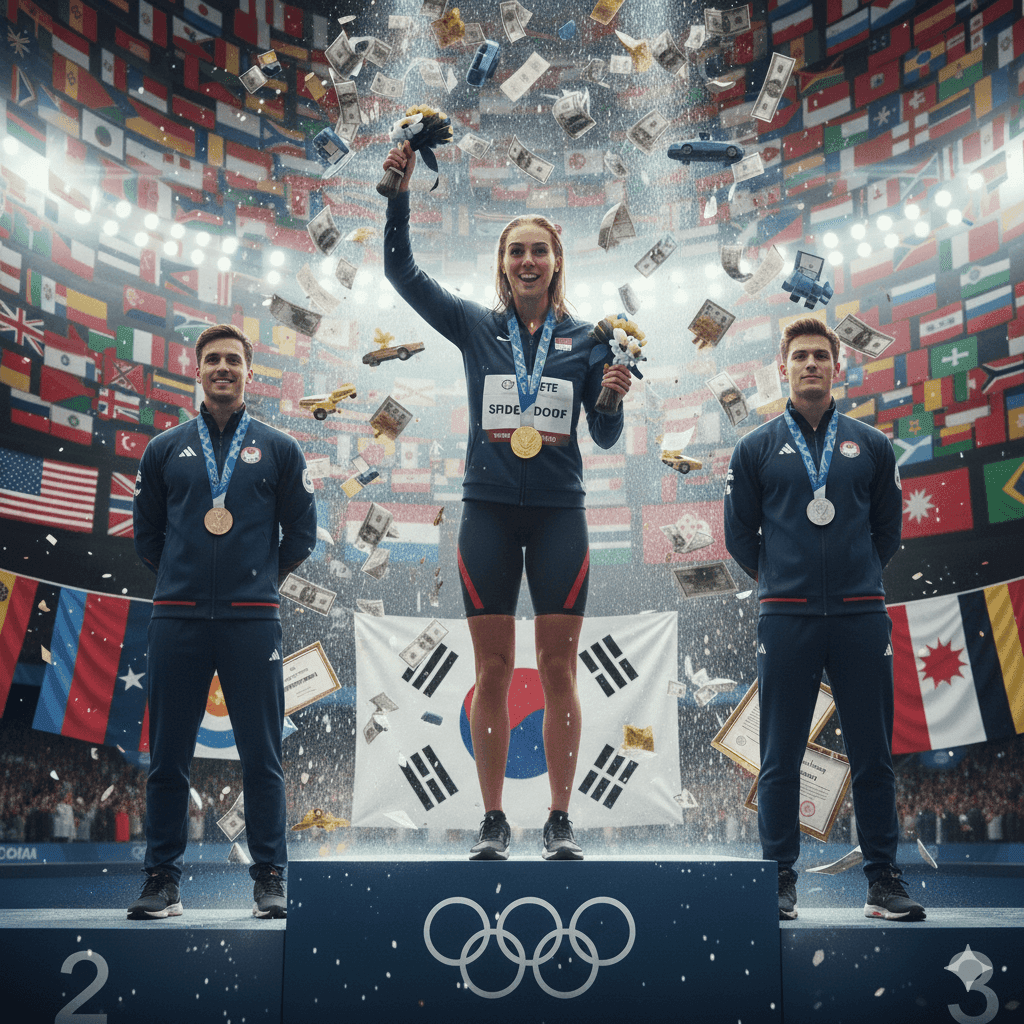
What Olympic Medalists Receive in Different Countries
Same medal. Very different futures. In some countries, a medal buys lifelong security. In others, it mostly buys a moment.
Winning an Olympic medal looks universal: the podium, the anthem, the spotlight. But what happens after the ceremony depends heavily on the country.
올림픽 메달은 전 세계가 같은 장면을 봅니다. 하지만 시상식 이후의 삶은 ‘나라’에 따라 완전히 달라집니다.
This isn’t only about cash. It’s about how a society rewards sacrifice: market opportunity, state protection, or institutional stability.
이건 단순히 “얼마 주냐”가 아니라, 사회가 희생을 보상하는 방식(시장 기회·국가 보호·제도적 안정)의 차이를 보여줍니다.
They reflect what each country believes success should earn you.
One-time bonuses from governments, federations, or sponsors.
정부·협회·스폰서의 일회성 포상금.
Pensions, jobs, housing, education, long-term welfare programs.
연금, 일자리, 주거, 교육, 장기 지원.
What the “reward” says about society’s values.
보상이 그 사회의 가치관을 어떻게 드러내는지.
Note: Exact amounts vary by year, sport, and federation. This article focuses on the structure and the most common patterns.
금액은 연도·종목·협회에 따라 달라질 수 있어, 여기서는 ‘구조’와 ‘일반 패턴’에 집중합니다.
What Medalists Typically Receive
Medalists often receive a combination of bonuses, pension-style support, strong public recognition, and (for many male athletes) life-changing military service benefits.
한국은 포상금·연금 성격 지원·사회적 인지도에 더해, 남자 선수에게는 병역 관련 혜택이 ‘인생을 바꾸는 요소’가 되기도 합니다.
U.S. prize money is comparatively modest. Most post-medal stability depends on sponsorships, media, and market demand.
미국은 국가 차원의 직접 보상은 상대적으로 작고, 이후 삶의 안정은 스폰서·미디어·시장 반응에 좌우되는 경우가 많습니다.
Beyond bonuses, medalists are often absorbed into corporate teams, federations, universities, and structured career paths.
일본은 포상금뿐 아니라 기업·협회·대학 등 조직 안으로 흡수되며 안정적인 경로가 만들어지는 경우가 많습니다.
Rewards can be high and wide-ranging (cash, housing, jobs), but are linked to a strong state-managed system and expectations.
중국은 금전·주거·직업 등 보상이 큰 편으로 알려져 있지만, 국가 주도 육성 시스템과 기대·관리의 강도도 함께 존재합니다.
The emphasis is often on strong funding and infrastructure before and during the athlete’s career, rather than large payouts afterward.
영국은 사후 포상보다 선수 커리어 ‘전 과정’에 대한 시스템 투자(훈련·인프라·지원)가 더 강조되는 편입니다.
Typically moderate bonuses, strong welfare frameworks, and smoother transitions into coaching, education, or public roles.
독일은 과도한 ‘스타 만들기’보다는 중간 수준 보상과 복지·전환 지원으로 커리어 안정성을 중시하는 편입니다.
The “Wait, What?” Countries
Some countries stand out not because they are “better,” but because their approach is extreme: either unusually high cash, unusually strong private-sector gifts, or almost no cash at all.
어떤 국가는 ‘좋고 나쁨’이 아니라 방식이 극단적이라 눈에 띕니다. 현금 보상이 매우 크거나, 민간 선물이 과감하거나, 반대로 현금 보상이 거의 없기도 합니다.
Singapore is often cited as offering some of the largest cash incentives for Olympic gold. It’s a high-reward, high-expectation model.
싱가포르는 금메달 현금 인센티브가 매우 큰 나라로 자주 언급됩니다. ‘큰 보상 ↔ 큰 기대’ 모델에 가깝습니다.
Medalists have sometimes received major private-sector gifts (like housing and lifetime perks), reflecting how deeply rare Olympic success resonates.
필리핀은 민간 기업의 파격적 선물(주거, 평생 혜택 등)이 화제가 된 적이 있습니다. 올림픽 성과의 희소성이 사회적 ‘폭발력’을 키웁니다.
Beyond prize money, medals can open doors into government roles, endorsements, and long-term influence.
인도는 상금 외에도 공공 직무, 광고·후원, 사회적 영향력 같은 ‘문이 열리는 효과’가 크게 작동하는 편입니다.
Norway is known for a philosophy that avoids large medal payouts, leaning instead on broader welfare and sports systems.
노르웨이는 메달에 큰 현금 보상을 얹기보다, 교육·복지·스포츠 시스템 자체로 선수 환경을 받치는 철학이 상징적으로 언급됩니다.
The Reward System Is a Cultural Statement
Medals create opportunities; the market decides the outcome.
메달은 ‘기회’를 만들고, 이후는 시장이 결정.
Medals are national assets; the state supports long-term stability.
메달은 국가적 성과; 장기 안정까지 국가가 책임.
Medalists are folded into organizations that provide structure and identity.
조직이 선수의 다음 삶을 흡수·구조화.
“What should society owe someone who sacrificed years for a single moment?”
This is why comparisons are so interesting: you’re not just comparing benefits. You’re comparing philosophies of success.
그래서 나라별 비교가 재밌습니다. “혜택”이 아니라 “성공을 바라보는 철학”을 비교하게 되기 때문입니다.
“If You Win a Medal, Your Life Is Set.”
Many people assume Olympic medals guarantee lifelong comfort. In reality, that depends on the country — and on what kind of support system exists outside sport.
“메달 따면 인생 편해진다”는 생각은 매우 흔하지만, 실제로는 국가별 지원 구조와 사회 시스템에 따라 완전히 달라집니다.
In some places, the medal is a safety net. In others, it’s a spotlight that fades quickly unless you turn it into a career.
어떤 나라에서는 메달이 안전망이 되지만, 어떤 나라에서는 ‘그 순간의 조명’일 뿐이라 이후 커리어로 연결해야 안정이 생깁니다.
Final Thought
Olympic medals measure athletic excellence — but they also reveal something else: what a country believes achievement should be worth.
올림픽 메달은 실력의 결과이지만, 동시에 그 사회가 ‘성과의 가치를 무엇으로 환산하는지’를 보여주는 거울이기도 합니다.
who gets support, who gets opportunity, and who gets neither.