

The Hidden Stories Behind the World’s Year-End Mega Events (Nov–Dec)
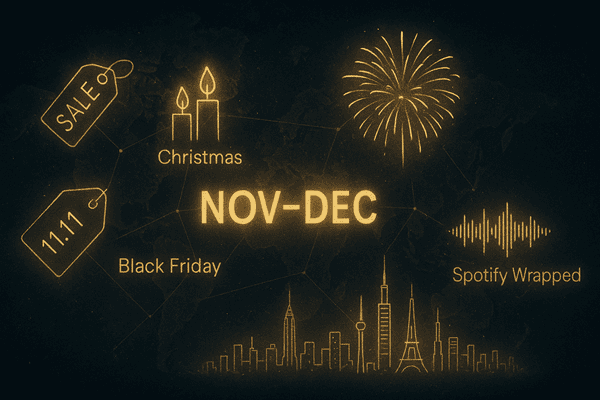
November and December aren’t simply the “holiday shopping season.” Behind today’s mega events lie unexpected beginnings: Black Friday once marked a chaotic police nightmare, 11.11 started as a dorm-room joke, Santa’s modern image was shaped by Coca-Cola, and Spotify Wrapped was born from a casual internal hackathon. These two months form the most story-rich period of the global calendar.
1. The Surprising Origins of the World’s Biggest Shopping Days
1-1. Black Friday — A Day Named by Exhausted Police Officers
Before it became a global discount frenzy, Black Friday was a term coined by Philadelphia police in the 1960s to describe the traffic chaos, accidents, shoplifting spikes, and overwhelming crowds the day after Thanksgiving. What retail brands later promoted as a cheerful shopping event was originally a departmental warning: “Black Friday is coming.”
- Police used “Black” to describe an unbearable workday.
- Retailers later rebranded it as “black ink” (profit) day.
- Today, it is the highest-grossing shopping day in the world.
1-2. Singles’ Day (11.11) — A Dorm Meme Turned Into a Trillion-Yuan Event
Now the world’s largest online shopping festival, Singles’ Day started as an inside joke among Chinese university students. The four “1”s in 11.11 visually represented people standing alone, turning it into a humorous “Day for the Unattached.”
- Origin: Dorm joke → informal “single friends’ night out.”
- Alibaba saw potential and converted it into a national shopping day.
- Now: massive sales surpassing Black Friday + Cyber Monday combined.
1-3. Cyber Monday — Born Because Home Internet Used to Be Slow
In 2005, when most households still had slow home internet, U.S. office workers did their online shopping at work on Monday. Shop.org simply gave this trend a name: Cyber Monday.
Today, it has evolved into the top shopping day for electronics, digital products, and tech deals worldwide.
1-4. Boxing Day — From Gifts for Servants to a Modern Clearance Day
In the U.K. and Commonwealth countries, Boxing Day began as a day when aristocratic families gave gift boxes to their staff after Christmas. This social tradition naturally shifted into a commercial “post-Christmas clearance” and eventually into the year-end sale holiday many know today.
2. Festivals That Illuminate the End of the Year
2-1. Diwali — A Night When Light Defeated Darkness
India’s Diwali, often called the “Festival of Lights,” originates from ancient stories of a heroic return and the lighting of lamps to celebrate the victory over evil. Modern Diwali nights combine warm oil lamps with some of the world’s most spectacular fireworks displays.
2-2. Christmas — Santa’s Red Suit Was a Marketing Choice
While Christmas marks the birth of Jesus, the modern global Santa — plump, jolly, red-suited — owes much of his appearance to 1930s Coca-Cola advertising.
- Saint Nicholas: traditionally slimmer, more solemn.
- Coca-Cola’s goal: a warm winter mascot for ads.
- Result: the standardized image of Santa we all know.
2-3. Hanukkah & Thanksgiving — The Eight-Day Miracle and the Turkey Myth
Hanukkah commemorates the miracle of oil that burned for eight days despite only being enough for one. Lighting the menorah today is a ritual of remembrance.
Thanksgiving, meanwhile, was not originally a “turkey day.” Early accounts featured ducks, geese, and venison. The idea of turkey as the centerpiece became popular through political symbolism and media influence.
3. Spotify Wrapped and the Rise of Year-End Digital Rituals
3-1. A Hackathon Experiment That Became a Global Habit
Spotify Wrapped started not as a global campaign but as a fun internal project — a hackathon idea turned annual phenomenon. It now functions as a digital diary of your year in sound.
3-2. Year-End Awards as the Closing Credits of Culture
From K-pop award shows to The Game Awards, year-end ceremonies serve as both recap and cultural reset:
- Celebrating the stories created throughout the year
- Setting expectations for the coming year
4. How Cities Around the World Count Down to Midnight
New York, Seoul, Tokyo, Dubai — Same Countdown, Different Meaning
At first glance, year-end countdowns look similar: fireworks, crowds, and the final “10, 9, 8…”. Yet each city carries a different cultural and emotional weight.
- New York – Times Square’s Ball Drop began as a PR stunt to promote a new lighting mast.
- Seoul – The Bosingak bell ceremony blends ritual and broadcast culture.
- Tokyo – 108 temple bells symbolize clearing earthly desires.
- Brazil – Oceanfront rituals, white clothing, and offerings to welcome luck.
5. The Year-End Isn’t Just a Season — It’s a Global Storybook
Bringing all these origins together makes one thing clear:
- Black Friday was once a police nightmare,
- 11.11 was a college joke,
- Spotify Wrapped was a side experiment,
- and Santa was redesigned by a beverage brand.
The end of the year is not merely a shopping period — it is when cities, cultures, and digital rituals converge into a global season of stories.