

ENCSAT · Suneung — Korea’s One-Day Life Changer
Why Korea Goes All-In on CSAT
한국 수능, 왜 이렇게까지 중요한가
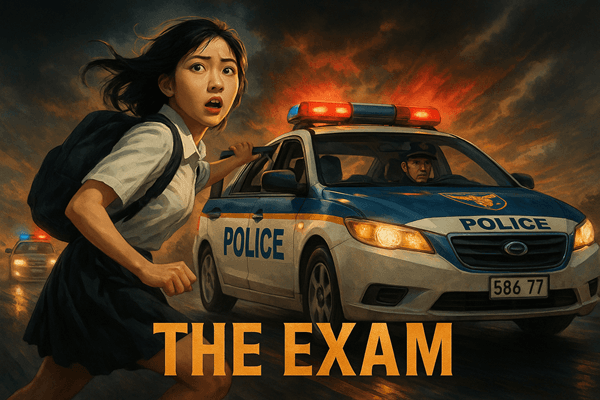
On one November morning, over half a million teenagers and young adults sit the same exam. Flights pause, stock markets delay opening, and police cars turn into free taxis. To understand why Koreans seem “obsessed” with the College Scholastic Ability Test (CSAT, 수능), you have to follow the numbers.
1. One Day, Half a Million Lives — CSAT by the Numbers
하루에 모이는 55만 명, 숫자로 보는 2025년 수능
Scale of the 2025 Exam
554,174
people applied for the 2025 CSAT — a 7-year high and about +6% YoY compared to 2024.
2025학년도 수능 지원자 수는 55만 4,174명으로, 전년보다 약 3만 1,500명 늘어난 최근 7년 내 최대 규모다.
Who Are the Test-Takers?
67% · 29% · 4%
Rough breakdown of 2025 applicants:
- High-school seniors: 67.1%
- Graduates & repeaters: 28.9%
- GED & others: 4.0%
재학생이 약 3분의 2, 졸업생·N수생이 3분의 1에 가까운 구조다. “한 번에 끝내지 못한” 이들이 다시 돌아오는 시험이라는 뜻이기도 하다.
The CSAT runs from 8:40 a.m. to 5:45 p.m. at around 1,300+ test centers nationwide. One exam day effectively coordinates the schedules of students, parents, teachers, civil servants, airlines, traders, and retailers.
수능은 전국 1,300여 개 시험장에서 오전 8시 40분부터 오후 5시 45분까지 치러진다. 이 하루에 맞춰 학생·학부모·교사·공무원·항공사·증권시장·유통업체까지 한국 사회의 시간표가 동시에 움직인다.
Recent CSAT Applicant Trend (2023–2025)
| Year | Total Applicants | Change vs. Previous Year | Comment |
|---|---|---|---|
| 2023 | 504,588 | – | Low-birth cohort, but still half a million students sitting the exam. |
| 2024 | 522,670 | +18,082 (+3.6%) | First noticeable rebound in applicants; repeaters hit a 21-year high. |
| 2025 | 554,174 | +31,504 (+6.0%) | Highest since 2018 — driven partly by the “Golden Pig” cohort & med-school boom. |
*Numbers rounded for readability. Even with one of the world’s lowest birth rates, Korea still sends well over half a million people into the same exam room ecosystem every November.
2. When the Country Literally Slows Down
비행기도 멈추는 시험: 수능 날 국가 시스템이 움직이는 방식
On CSAT day, Korea does not just “care” about an exam; the state actively re-routes itself around it. A few concrete policies show how far this goes:
- 35-minute nationwide flight ban during the English listening section. 영어 듣기평가 시간(약 35분) 동안 국내선·국제선 항공편 이착륙이 중단되거나 고도가 제한된다. 소음이 수험생 집중에 영향을 주지 않도록 하기 위함이다.
- Around 140 flights (≈75 international, 65 domestic) are rescheduled in that window. 이 짧은 시간 때문에 국제선·국내선 140여 편의 운항이 조정된다.
- Government agencies and many firms ask workers to start at 10 a.m. instead of 9 a.m., to keep roads clear for students. 공공기관·기업들은 출근 시간을 한 시간 늦춰 10시 출근을 권고하고, 등교 시간대 도로를 수험생에게 양보한다.
- Over 10,000 police officers are deployed for traffic control, and more than 9,000 officers guard printing and grading facilities. 교통 관리에만 1만여 명의 경찰이 투입되고, 인쇄·채점 시설 경비에도 9,000명 이상이 배치된다.
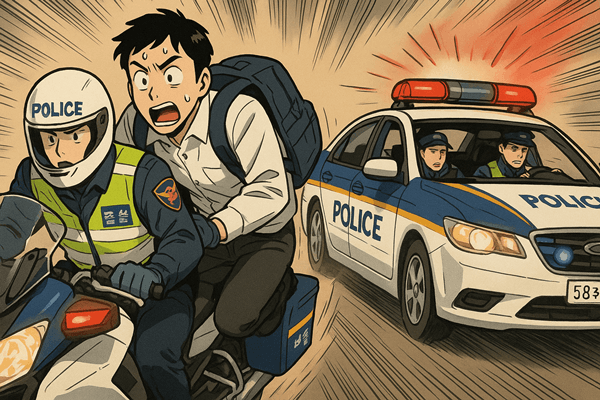
- Any student running late can dial 112 and get a free police escort on a motorbike or in a patrol car — siren included. 지각 위기 학생은 112에 전화하면, 경찰차·오토바이가 “무료 수능 택시” 역할을 해 시험장까지 태워다 준다.
For a few hours, CSAT is effectively treated as a national security operation: air traffic, road traffic, defense drills, and even construction noise are temporarily subordinated to one goal — giving 18-year-olds a quiet room.
이 짧은 몇 시간 동안 수능은 사실상 국가 단위 프로젝트처럼 관리된다. 항공·도로·군 훈련·공사 소음까지 모두 멈춰, 만 18세 전후의 수험생에게 “조용한 교실” 하나를 보장해 주는 것이다.
3. Behind the Obsession: Money, Risk, and the Private Education Machine
극성의 배경: 돈, 리스크, 그리고 사교육 기계
CSAT is not just a one-day event; it is the endpoint of a multi-trillion-won industry. Korea’s private education market reached around 29.2 trillion KRW in 2024, a record high despite a shrinking student population. The average student spent about 474,000 KRW per month on private education.
수능은 하루짜리 이벤트가 아니라, 연 29조 원 규모 사교육 시장의 종착점이다. 학생 수는 줄어도 2024년 사교육비 총액은 역대 최대치인 약 29.2조 원을 기록했고, 1인당 월평균 사교육비는 약 47만 4천 원 수준까지 올라갔다.
Average monthly private education per student (2024)
474k ₩
All students (elementary–high school), national average.
By school level
• Elementary: 442k ₩
• Middle: 490k ₩
• High: 520k ₩
Top subjects by spending
• English ≈ 141k ₩
• Math ≈ 134k ₩
• Korean, Social Studies/Science follow.
When families pour this much time and money into preparation, the CSAT inevitably becomes a high-risk financial bet. One exam score is expected to “pay back” years of cram-school fees by opening the gate to a prestigious university — and, in many parents’ minds, to a safer job market and marriage market.
이처럼 시간과 돈이 크게 투입되다 보니, 수능은 자연스럽게 고위험·고수익 투자가 된다. 몇 년간의 학원비·과외비를 한 번에 회수해 줄 ‘프리미엄 대학 입장권’ 역할을 수능 성적이 해 줄 것이라는 기대가 부모 세대 머릿속에 선명하게 자리 잡고 있다.
4. Why So Many Students Come Back: Repeat Takers and Medical School Fever
왜 이렇게 많이 다시 치를까? 재수·N수와 의대 확대의 충돌
In recent years, Korea has seen a sharp rise in repeat CSAT takers. For the 2024 exam, the number of repeaters reached its highest level in 21 years. Many of them are not simply aiming for “any” university; they are targeting a narrow band of extremely competitive majors, especially medicine.
최근 몇 년간 수능은 재수·N수생 비중이 20년 만에 최고 수준까지 올라갔다. 이들은 단지 “어느 대학이든”이 아니라, 특히 의대·치대 등 극단적으로 경쟁이 치열한 학과를 목표로 다시 시험장에 돌아온다.
Context: Medical School Seats
From the 2024 to 2025 admission cycles, the government increased the quota for medical schools from about 3,113 to 4,610 seats — an increase of nearly 1,500 spots (+48%). This policy unintentionally intensified the perception that “now is the last big window” to jump into medicine, sending more graduates back to the CSAT.
2024→2025학년도 사이 정부의 의대 정원 확대(3,113명 → 4,610명)는 “지금이 마지막 기회”라는 인식을 자극하며 더 많은 졸업생들을 수능장으로 되돌려 보냈다.
In the 2025 CSAT applicant pool, nearly 3 out of 10 test-takers are graduates or other non-seniors. Culturally, they are labeled:
- Jaesusaeng (재수생) — taking CSAT for the second time.
- Samsusaeng (삼수생) — third attempt.
- N-susaeng (N수생) — fourth or more.
한국에서는 재도전을 응원하면서도, 동시에 “재수·삼수·N수”라는 꼬리표가 따라다닌다. 이 꼬리표가 주는 사회적 압박 + 경제적 부담이 수능을 더 극단적인 시험으로 만든다.
5. How Much Does CSAT Really Matter? Data-Driven View of Life Chances
수능이 인생을 얼마나 바꾸는가 — 숫자로 보는 ‘입시의 사다리’
It is true that Korea’s university admissions have diversified: high-school records, essays, portfolios, extracurriculars, and interviews all matter. Yet, for many students, the CSAT still acts as a “single-day filter” for:
- Access to the top tier “SKY” universities (SNU, KU, Yonsei).
- Qualifying for scholarships and dormitory priority.
- Remaining competitive for med-school and law-school admissions.
- Meeting unwritten expectations on résumés, blind recruitment, and even dating apps.
학생부·논술·면접·포트폴리오 등 전형이 다양해졌지만, 여전히 수능은 많은 학생에게 “1일차 필터” 역할을 한다. 상위권 대학 컷을 통과할 기본 점수, 장학금·기숙사·의대·로스쿨 진학의 최소 조건으로 작동하는 것이다.
Why CSAT Feels Like a “One-Shot” Exam (Summary)
- • Concentrated competition: half a million test-takers, very few “dream majors.”
- • High sunk cost: years of private education spending and sleep deprivation.
- • Family pressure: parents often pause their own work and schedules for the exam.
- • Relative evaluation: performance depends not only on your score but on everyone else’s.
- • Weak safety net: fear that “one bad November” means losing an entire year.
요약하자면, 수능은 집중된 경쟁·높은 매몰비용·가족의 기대·상대평가·재도전의 비용이 겹치면서 “한 방” 시험처럼 느껴진다.
6. So, Why Is Korea “So Extreme” About CSAT?
결론: 한국 수능이 유독 극단적으로 보이는 이유
Seen from outside, CSAT day can look almost surreal: flight bans, police escorts, temples full of parents, and half a million young people walking into buildings at the same time.
외부에서 보면, 수능 날 한국은 다소 비현실적으로 보일 수 있다. 비행기가 멈추고, 경찰이 택시가 되며, 사찰과 교회에는 부모들이 가득 모인다.
But if you line up the data, the “obsession” is less about a single exam and more about a structure:
- Few high-status slots (top universities, med-school seats) vs. many aspirants.
- High private education investment that families feel must “pay off.”
- Strong belief in education as social mobility in a low-growth, high-inequality era.
- Compressed timing: one exam season per year, limited do-overs without stigma.
즉, 한국의 ‘수능 극성’은 결국 희소한 좋은 자리 · 과도한 사교육 투자 · 교육에 대한 계층상승 신뢰 · 재도전에 따른 낙인이 한날한시에 겹치는 구조에서 나온다.
CSAT is not the only gate in Korean life, but it is still the first big gate. And for one November morning each year, an entire country chooses to hold its breath while 18-year-olds try to walk through it.
수능이 인생의 전부는 아니지만, 여전히 많은 한국인에게 첫 번째 큰 관문인 것만은 분명하다. 그래서 한국 사회는 매년 11월의 어느 아침, 10대 후반 청소년들이 그 관문을 지나가는 동안 잠시 숨을 고른다.