

한국인의 “내가 낼게” 문화,
왜 그렇게 뜨거운가
Why Koreans keep saying “I’ll pay!”
— the wholesome kindness battle
If you dine out in Korea, you might witness a friendly duel at the cashier: two people lunging with cards, whisper-yelling “No, I’ll pay.”
한국에서 밥을 먹다 보면 계산대 앞에서 카드 빼앗기 씨름이 벌어집니다. “됐어, 내가 낼게.” “아냐 내가.” — 귀여운 호의 전쟁이죠.
 “I’ll pay!” — the friendly duel at the counter.
1) Scene setter
“I’ll pay.” “No, I will!”
장면으로 보는 ‘호의 전쟁’
Reality show in 10 seconds: Two friends sprint to the counter. One distracts staff, the other taps first. Winner smiles; loser vows: “Coffee’s on me.”
10초 요약: 둘이 계산대로 달리기 → 한 명은 직원에게 말 걸기, 다른 한 명은 선결제 탭! → 진 사람: “그럼 카페는 내가.”
- Not math — emotion. It’s less about splitting, more about caring.
- 계산이 아니라 마음. N분의 1보다 관계를 더 예쁘게 유지하는 방식.
- Pay today, you host. Next time, roles swap — kindness circles back.
2) Why do Koreans do this?
왜 서로 내겠다고 할까
Because “jeong (정)” — a warm relational glue. Paying becomes a tiny celebration of the relationship.
정(情)은 관계를 붙이는 따뜻한 접착제. 계산은 사소한 축하가 된다.
Because social grace — seniors or hosts often feel responsible; juniors love returning the favor later.
체면/매너 코드: 선배·연장자가 주로 내고, 후배는 다음 판을 준비한다.
“밥은 내가, 디저트는 네가, 택시는 우리 카드게임.”
“선결제 선점권: 화장실 가는 척 + 카운터 지름길.”
3) Mini role-play
상황극으로 배우는 ‘내가 낼게’
Scene A: Friends
A: “I’ll pay.” — B: “Nope, I tapped already.” — A: “Fine. Dessert’s on me.”
A: “내가 낼게.” — B: “이미 찍었어.” — A: “그럼 디저트는 내가.”
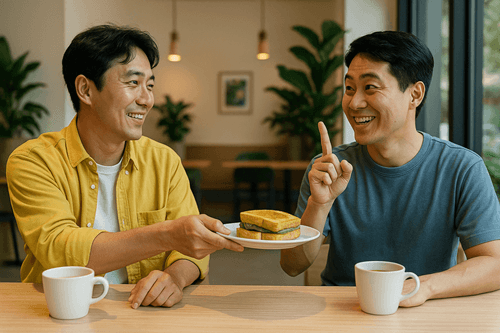
Scene B: Work dinner
Senior: “Let me host this one.” — Junior: “Thank you! I’ll grab coffee after.”
선배: “이번은 내가.” — 후배: “감사합니다! 커피는 제가 살게요.”
4) Pro-tips / 현명한 ‘호의 전쟁’ 스킬
① Signal early
Say it upfront: “Today’s on me.” It sets the tone before the bill.
먼저 선언: “오늘은 제가 모실게요.” 계산 전에 분위기 확정.
② Round system
Lunch–dessert rhythm: I buy lunch, you grab coffee. No spreadsheets.
라운드 방식: 점심은 내가, 디저트는 네가. 호의엔 엑셀이 필요 없다.
③ Respect roles
Age/host matters: Seniors or hosts often pay first; juniors return later.
연장자/호스트 존중: 먼저 내면, 다음 판으로 돌려주기.
④ Big tabs? Split
Don’t force kindness: For large bills, split fairly without drama.
큰 금액은 N분의 1: 매너는 유지, 부담은 줄이기.
⑤ Mobile peace
Tap now, transfer later: Pay first, send money in seconds.
선결제-후송금: 먼저 긁고, 바로 송금으로 마무리.
⑥ Keep it fun
No scorekeeping: Kindness is a vibe, not a ledger.
장부 금지: 호의는 분위기, 회계가 아님.
5) Q&A — 진짜 많이 묻는 것들
Q1. Do Koreans hate splitting evenly?
A. Not at all. We just enjoy the rhythm: I treat, you treat. Splitting is fine for big bills.
A. 아니요. 번갈아 사는 리듬을 좋아할 뿐. 큰 계산은 나눠도 OK.
Q2. What if I insist on paying?
A. Smile and be quick. Or promise the next round. Both are classy.
A. 미소 + 스피드가 관건. 아니면 다음 라운드 예약.
Q3. Any phrases to memorize?
A. “제가 살게요!” (I’ll pay), “다음은 제가” (I’ll get the next).
A. “제가 살게요!”, “다음은 제가!” — 발음만 자신 있게.