

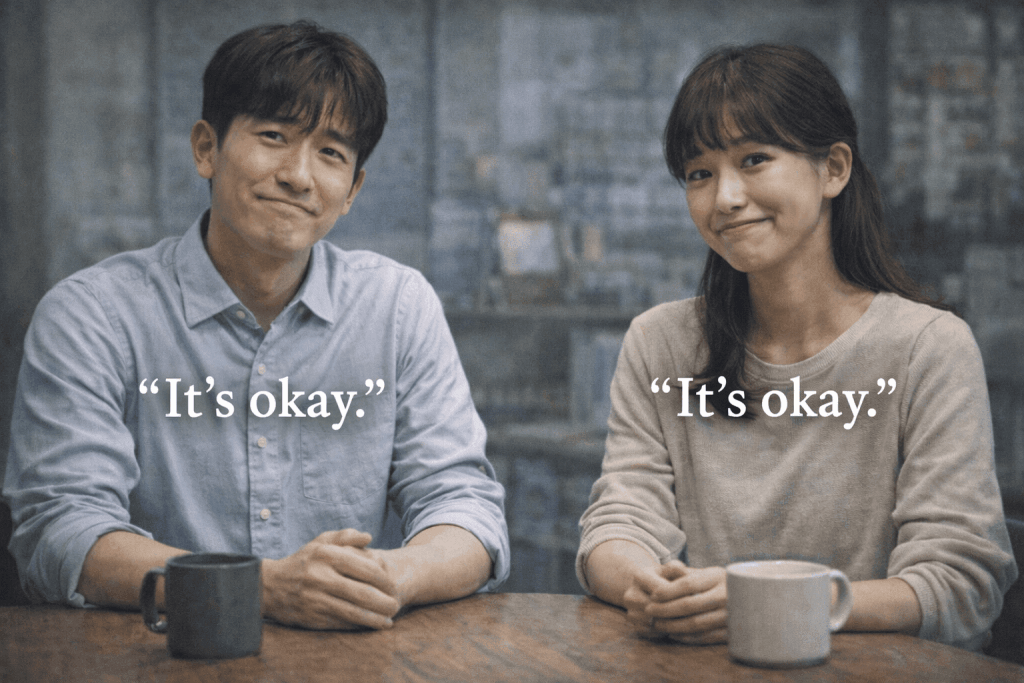
Why Koreans Say “It’s Okay” When It’s Clearly Not
Sometimes “It’s okay” really means okay. But sometimes it means: “Please don’t make me say the uncomfortable part.”
You apologize. They smile. They say, “It’s okay.” The conversation moves on.
당신이 사과하면, 상대는 미소를 짓고 “괜찮아요”라고 말합니다. 대화는 자연스럽게 넘어갑니다.
And then later… something feels different. Messages get shorter. Invitations slow down. The warmth drops — without anyone explaining why.
그런데 이후에… 뭔가가 달라집니다. 메시지가 짧아지고, 초대가 줄고, 온도가 떨어지는데 이유는 설명되지 않습니다.
If it was “okay,” why did it change?
This is not about Koreans being dishonest. Most people aren’t trying to trick you.
이건 “한국인은 거짓말한다”는 얘기가 아닙니다. 대부분 속이려는 의도가 있는 게 아닙니다.
It’s about what “okay” is doing socially: it can protect the relationship, protect the mood, or protect the speaker.
핵심은 “괜찮아요”가 사회적으로 수행하는 역할입니다. 관계를 지키거나, 분위기를 지키거나, 말하는 사람 자신을 보호합니다.
Sometimes It Really Means “No Problem”
You bumped into someone lightly. You were a minute late. You misheard a word.
가벼운 실수(살짝 부딪힘, 1~2분 지각, 단어를 잘못 들음) 정도는 정말 괜찮을 때가 많습니다.
When trust is already built, “okay” often means the issue is already resolved.
신뢰가 충분히 쌓인 관계에서는 “괜찮아요”가 실제로 정리된 의미일 때가 많습니다.
Sometimes they’re calm because they decided it’s not worth turning into a conflict.
상대가 이미 감정 정리를 끝내서, 굳이 갈등으로 키우지 않기로 결정했을 수도 있습니다.
핵심: 모든 “괜찮아요”가 위험 신호는 아닙니다.
When “Okay” Means “Please Don’t Make Me Say More”
In many Korean contexts, direct confrontation can feel heavier than the original problem. So “It’s okay” becomes a social shortcut.
많은 한국적 맥락에서는, 직접적인 대립이 원래 문제보다 더 큰 부담으로 느껴질 수 있습니다. 그래서 “괜찮아요”가 사회적 지름길이 되기도 합니다.
“Let’s not make this awkward right now.”
“지금 분위기 어색하게 만들지 말자.”
“If I say the truth, this might change how we feel about each other.”
“솔직하게 말하면 관계 온도가 바뀔 수 있다.”
“I don’t want to be seen as sensitive, demanding, or difficult.”
“예민/까다로움/민폐로 보이고 싶지 않다.”
Sometimes “okay” quietly asks: “Will you notice without me spelling it out?”
때로 “괜찮아요”는 “굳이 말 안 해도 알아차릴 수 있어?”라는 무언의 테스트가 됩니다.
“It’s okay” can be less about the event — and more about avoiding a difficult conversation.
Four Everyday Situations Where This Happens
They say it’s fine, but now they’re fixing it quietly — and remembering it.
인수인계가 빠졌는데도 “괜찮아요”라고 말합니다. 하지만 속으로는 조용히 수습하고, 기억합니다.
They say okay, but your “adjustment tax” builds over time.
막판 변경에도 “괜찮아”라고 합니다. 하지만 ‘조정 비용’은 누적됩니다.
They don’t want a fight. So they keep it inside — until they pull away.
싸우기 싫어서 참습니다. 그러다 어느 순간 거리를 둡니다.
Even when unhappy, some people keep the tone smooth — and switch places later.
불만이 있어도 톤을 유지합니다. 대신 나중에 조용히 ‘다른 선택’을 합니다.
The key is that Korean “okay” often postpones the conflict — it doesn’t erase it.
핵심은 한국식 “괜찮아요”가 갈등을 ‘지워버리는’ 게 아니라, ‘뒤로 미루는’ 경우가 많다는 점입니다.
Why “Are You Sure?” Can Backfire
Many foreigners respond to “It’s okay” with a direct follow-up: “Are you sure? Tell me honestly.”
외국인들은 “괜찮아요”를 들으면 종종 이렇게 되묻습니다. “진짜 괜찮아? 솔직히 말해.”
It sounds respectful — but it can force the speaker into the exact situation they were trying to avoid: a heavier conversation, right now.
예의 있어 보이지만, 상대가 피하려던 상황(지금 당장 더 무거운 대화)으로 밀어 넣을 수 있습니다.
but reducing the burden you created.
How to Respond When You Hear “It’s Okay”
Make the fix, not the debate.
“Got it. I’ll handle it today.”
논쟁보다 수습을 먼저 하세요.
“알겠어. 오늘 내가 정리할게.”
Reduce future friction.
“Next time I’ll confirm earlier.”
다음 마찰을 줄이세요.
“다음엔 내가 더 일찍 확인할게.”
Offer an easy exit for honesty (optional).
“If anything bothered you, you can tell me anytime.”
솔직함을 ‘편하게’ 열어두세요(선택).
“혹시 불편한 게 있으면 언제든 편하게 말해줘.”
Demand emotional clarity on the spot.
“No, tell me right now.”
당장 감정의 결론을 요구하지 마세요.
“아니야, 지금 말해.”
핵심 규칙: “괜찮아요”를 들었을 때 가장 안전한 대응은 더 깊은 설명을 뽑아내는 게 아니라, 내가 만든 부담을 줄이는 것인 경우가 많습니다.
Why This Fits Everything We’ve Discussed
If you’ve read the previous episodes, you’ll notice the pattern: avoiding direct friction, avoiding visible ownership, and protecting social smoothness.
이전 편들을 읽었다면 패턴이 보일 겁니다. 직접 충돌을 피하고, ‘주인이 되는 것’을 피하고, 사회적 매끄러움을 지키는 흐름입니다.
while the real emotional accounting happens quietly underneath.
Final Thought
“It’s okay” isn’t always a lie. It’s often a choice: to keep the moment socially safe.
“괜찮아요”가 항상 거짓말은 아닙니다. 다만 그 순간을 ‘사회적으로 안전하게’ 유지하기 위한 선택일 수 있습니다.
“Let’s keep this smooth — and deal with the discomfort quietly.”
If you understand that, you’ll stop being shocked by silence — and start seeing the structure behind it.
이걸 이해하면 한국에서의 침묵이 더 이상 당황스럽기보다, 그 뒤에 있는 구조로 보이기 시작합니다.