

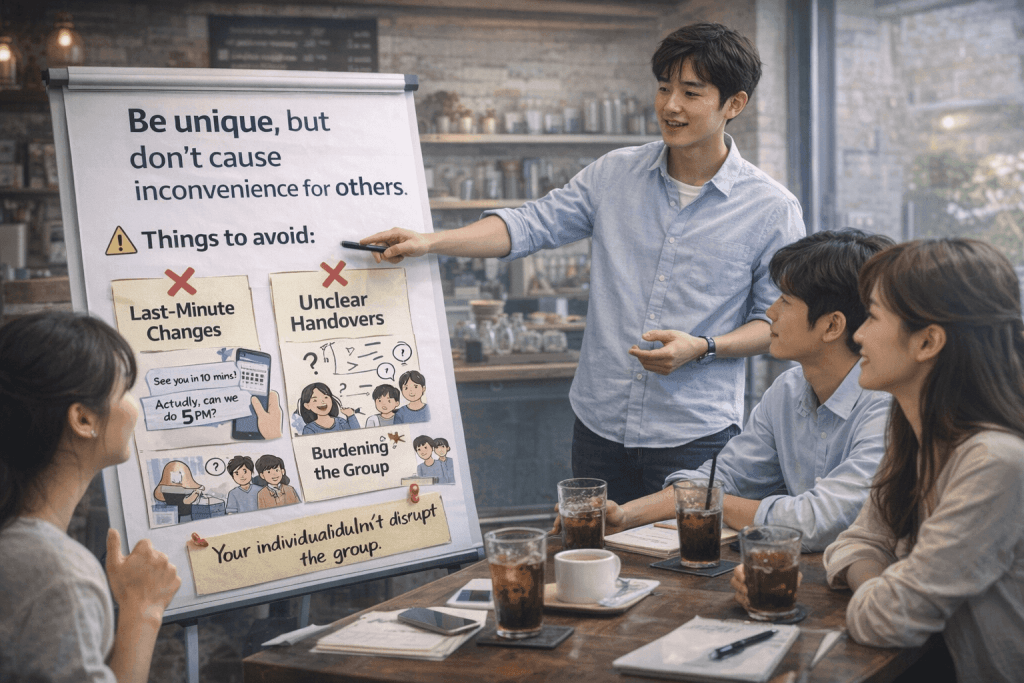
Why Koreans Don’t Mind Standing Out — They Mind Causing Trouble
Individuality is welcome. But if your individuality creates extra work, discomfort, or cleanup for others — that’s where the tension begins.
Korea is sometimes described as a place where people dislike individuality. That framing is outdated — especially in a world of creators, personal brands, and Gen Z culture.
한국은 종종 ‘개성을 싫어하는 사회’로 묘사되지만, 이 프레임은 특히 요즘 기준으로는 낡았습니다. 크리에이터·퍼스널 브랜딩·Z세대 문화가 이미 일상이니까요.
What many Koreans actually react to is not standing out. It’s the moment standing out starts to create friction for everyone else.
많은 한국인이 민감하게 반응하는 지점은 ‘튀는 것’ 그 자체가 아니라, 그 튐이 타인의 피로·조율·뒷정리로 이어지는 순간입니다.
It’s “Does this make things harder for others?”
A useful translation of what people mean by “causing trouble” is: making your choices someone else’s problem.
‘민폐’ 또는 ‘피곤한 사람’으로 인식되는 순간을 한 문장으로 옮기면, 내 선택의 비용을 남에게 넘기는 것에 가깝습니다.
Different style, unique taste, bold opinions — if you handle the consequences.
취향·스타일·의견이 독특해도, 그 결과를 본인이 감당하면 문제 되지 않습니다.
Last-minute changes, unclear handovers, emotional burden, cleanup left to others.
막판 변경, 부실한 인수인계, 감정 부담, 뒷정리를 남에게 떠넘기는 순간 피로가 쌓입니다.
Scene 1: Standing Out at Work — When It’s Completely Fine
A colleague has a distinct look. They speak clearly in meetings. They share bold ideas without hesitation.
어떤 동료는 스타일이 확실하고, 회의에서 말도 분명하며, 아이디어도 적극적으로 냅니다.
In many modern Korean teams, this is not only accepted — it can be respected.
요즘 한국 조직에서도 이런 모습은 충분히 수용되고, 오히려 ‘센스’나 ‘역량’으로 평가되기도 합니다.
The Exact Moment It Turns Into “Trouble”
The same colleague starts doing one of these:
하지만 같은 사람이 아래 같은 행동을 반복하기 시작하면 분위기가 바뀝니다.
They change direction after others have already aligned.
다른 사람들이 맞춰둔 뒤에 방향을 뒤집습니다.
They leave missing context, forcing others to guess.
맥락 없이 넘겨서 다른 사람이 ‘추측’으로 메웁니다.
They draw boundaries only when cleanup is needed.
뒷정리 단계에서만 갑자기 선을 긋습니다.
They turn tension into a group mood problem.
개인 감정이 팀 분위기 부담으로 번집니다.
Now the label forms quietly:
이 지점부터는 조용히 이런 말이 붙습니다.
Notice what changed: not their individuality, but the cost others had to pay.
바뀐 건 ‘개성’이 아니라, 그 개성이 만들어낸 타인의 비용입니다.
Scene 2: Friend Groups — The “Adjusting for You” Tax
Many Korean friend groups are flexible. You can be different. You can have your own style.
한국의 친구 관계도 생각보다 유연합니다. 다르고, 독특하고, 스타일이 확실해도 괜찮습니다.
But here’s a common pattern: one person repeatedly changes the plan late, and everyone else keeps adjusting.
하지만 이런 패턴이 반복되면 문제가 됩니다. 한 사람이 계속 막판에 약속을 바꾸고, 다른 사람들이 계속 거기에 맞추게 되는 상황입니다.
“It’s okay.” (twice)
And then… silence.
The group rarely confronts directly. They simply stop inviting.
직접적으로 따지기보다는, 어느 순간부터 조용히 초대가 줄어듭니다.
Scene 3: Early Dating — “Different” Is Attractive, “Hard” Is Not
In dating, standing out can be a huge advantage. Unique tastes, bold personality, confident self-expression — attractive.
연애 초기에는 개성이 오히려 강점이 될 수 있습니다. 취향이 확실하고, 표현이 분명한 사람은 매력적으로 보이기도 하죠.
But if that uniqueness quickly turns into repeated discomfort — unpredictable moods, constant tests, emotional labor — interest fades fast.
하지만 그 개성이 곧바로 반복적인 불편함(감정 기복, 잦은 시험, 정서적 노동)으로 바뀌면 호감은 빠르게 식습니다.
It’s “This feels exhausting.”
Why Gen Z Is Often Stricter (Not Looser)
A common assumption is that Gen Z is “more tolerant,” so individuality should be easier. That’s true — up to a point.
Z세대는 “더 관대하다”는 말이 자주 나오죠. 개성에 관대한 건 맞습니다. 다만 ‘어느 지점까지’입니다.
Many younger Koreans are extremely open to self-expression — but also quick to cut ties when someone shifts burden onto others.
젊은 세대일수록 자기표현에는 열려 있지만, 부담을 남에게 넘기는 순간 관계를 정리하는 속도도 더 빠른 편입니다.
This isn’t coldness. It’s boundary clarity.
이건 냉정함이라기보다, 경계와 책임을 더 명확히 하려는 태도에 가깝습니다.
This Isn’t “Conservatism” — It’s Coordination Cost
In high-density, fast-moving environments, small disruptions spread. When coordination breaks, everyone pays time and emotional cost.
밀도가 높고 속도가 빠른 환경에서는 작은 어긋남이 쉽게 번집니다. 조율이 깨지면 모두가 시간과 감정 비용을 치르게 됩니다.
So people don’t punish individuality. They avoid repeated friction.
그래서 사람들은 ‘개성’을 처벌하는 게 아니라, 반복되는 마찰을 피하려고 합니다.
실전 요약: 한국에서 ‘잘 맞는다’는 건 ‘우리랑 똑같다’가 아니라, “같이 움직일 때 부드럽다”에 가깝습니다.
How to Stand Out Without Being Labeled “Trouble”
If you change direction, also take responsibility for what breaks.
방향을 바꿨다면, 깨지는 부분의 책임도 같이 가져가야 합니다.
Decline early, clearly, and politely — not last-minute.
거절은 늦게 흐리게 하지 말고, 일찍 정중하게 하는 편이 낫습니다.
Be unique — but keep collaboration predictable.
독특해도 좋지만, 협업의 리듬은 예측 가능하게 유지하는 게 중요합니다.
Be honest, but don’t outsource emotional processing to the group.
솔직하되, 감정 처리를 집단에게 떠넘기지 않는 감각이 필요합니다.
Final Thought
Korea doesn’t ask you to be invisible. It asks you to be accountable.
한국은 당신에게 ‘튀지 말라’고 요구하기보다, ‘책임 있게 튀라’고 요구하는 편에 가깝습니다.
just don’t make others carry the weight.
Once you understand that, a lot of Korean social dynamics start to make sense — from group chats to friendships to workplaces.
이 관점을 이해하면 단톡방, 친구 관계, 직장 문화까지 한국의 많은 사회적 장면이 더 잘 설명되기 시작합니다.